
The honest take
ABC vs EBC, without the marketing
Every year, roughly 65,000 trekkers complete the Everest Base Camp route and close to 50,000 finish the Annapurna Base Camp trek. Both carry the words 'base camp' in their names, and both climax at the foot of 8,000-metre giants, but the day-to-day experience on each is shaped by entirely different geographies, cultures, and logistics. Deciding between them is the single most-asked question we receive from first-time Nepal trekkers.
The Everest trek is a slow, deliberate climb through the Khumbu valley, home to the Sherpa community, ancient Buddhist monasteries, and a trail infrastructure shaped by seven decades of mountaineering expeditions. You'll fly into Lukla (often listed among the world's most weather-affected airports), then spend four consecutive nights sleeping above 4,400 metres. The rhythm of the trek is built around acclimatisation, not scenery. Your feet feel the altitude; your heart beats louder every morning. The reward is the view from Kala Patthar at sunrise, with Everest lit from behind and the Khumbu icefall glowing below.
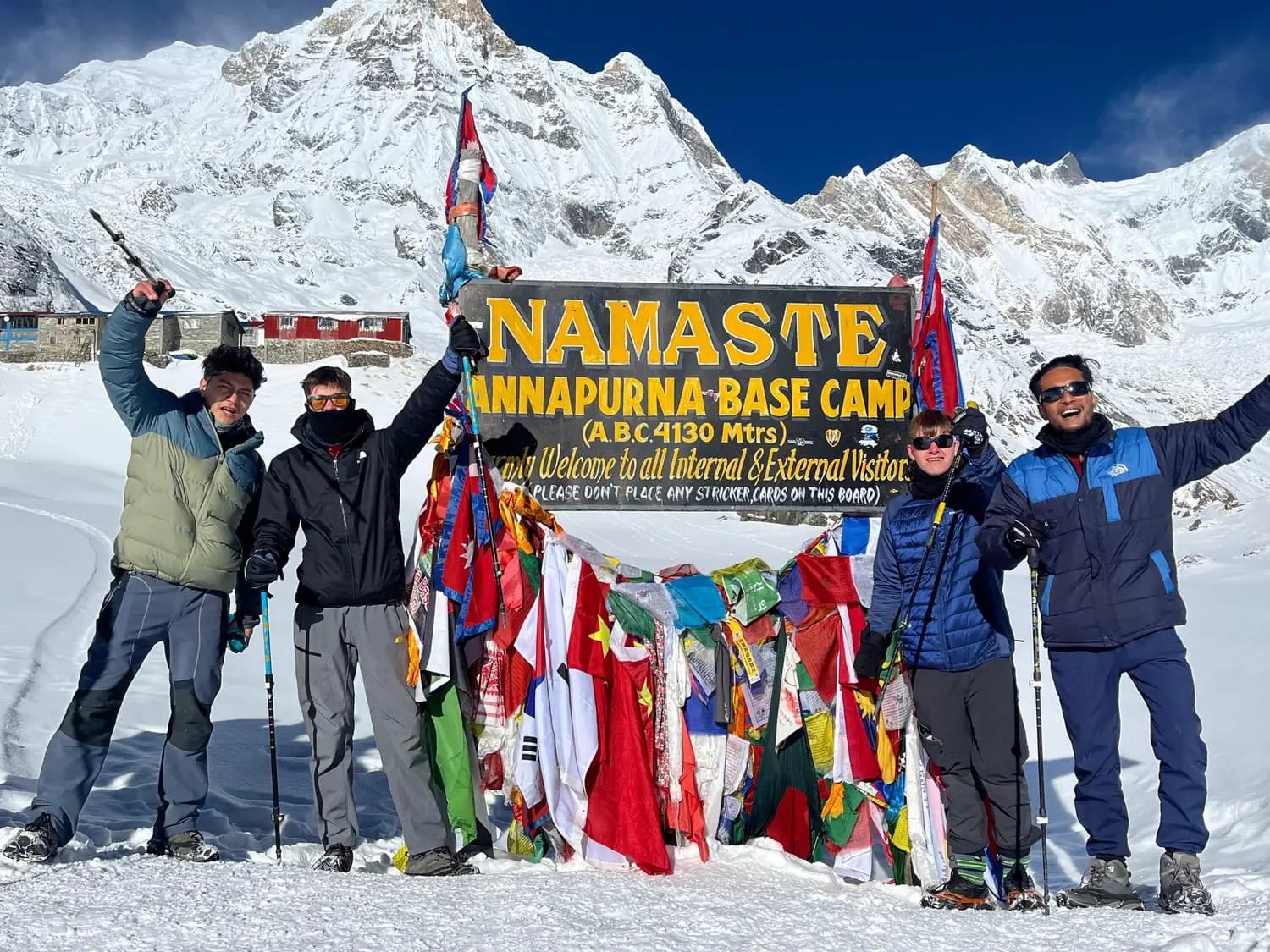
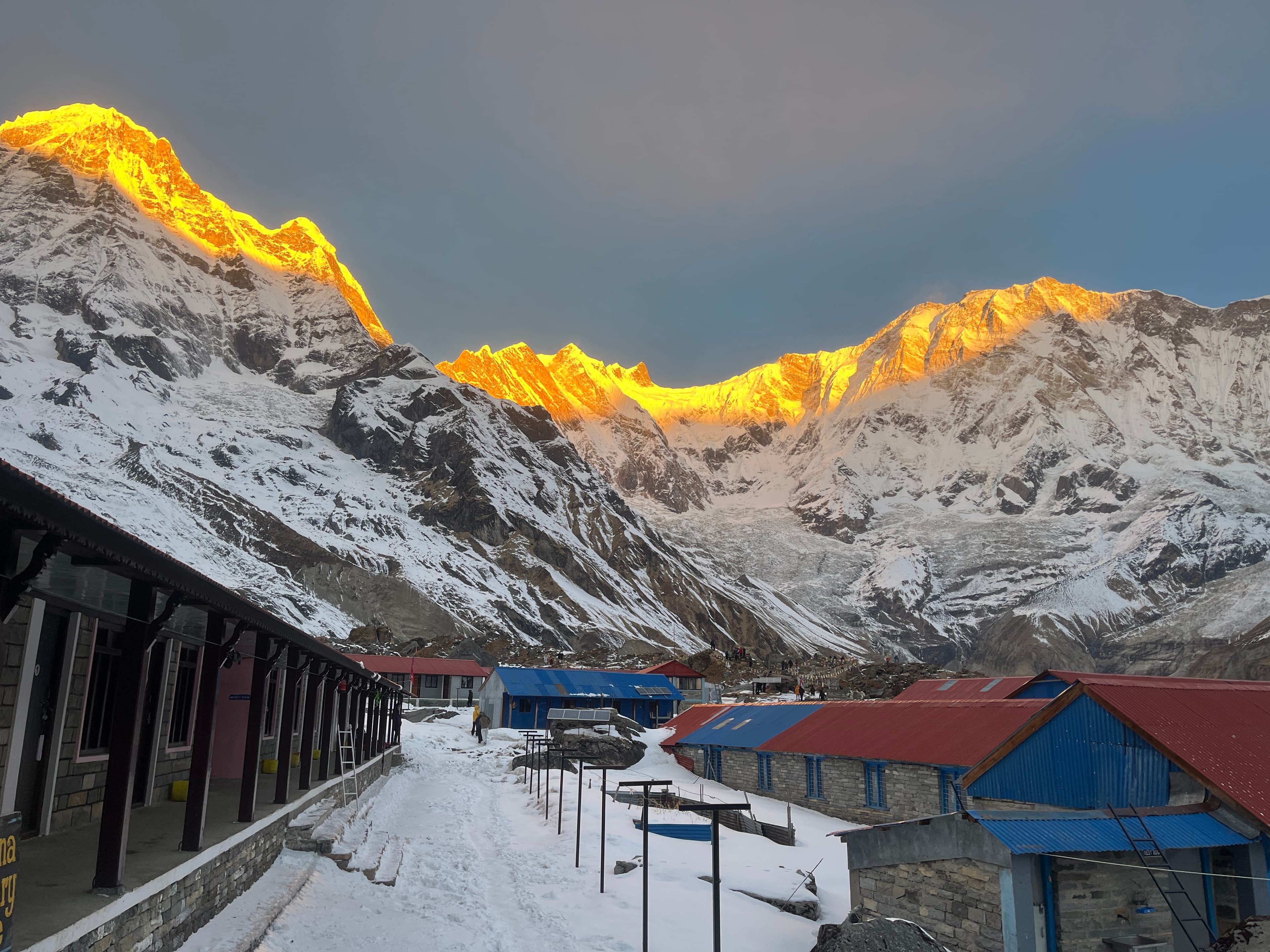
The Annapurna Sanctuary trek is an entirely different animal. You start from Pokhara, climb out of terraced rice paddies and rhododendron forest, and drop into a glacial amphitheatre ringed by Annapurna I, South, Machapuchare, Hiunchuli and Gangapurna. You never sleep above 3,200 metres until the final night. There is no mountain flight, no week-long acclimatisation grind, just a fast, beautiful route into some of the most vertical scenery on Earth.
Which of these trips suits you depends almost entirely on three variables: how much time you have, how your body handles altitude, and whether the symbolic weight of the word 'Everest' outranks the practical joys of a shorter, cheaper, more predictable trek. This guide walks through every factor so that by the end you'll know, with confidence, which one you're booking.
